01 — Project details
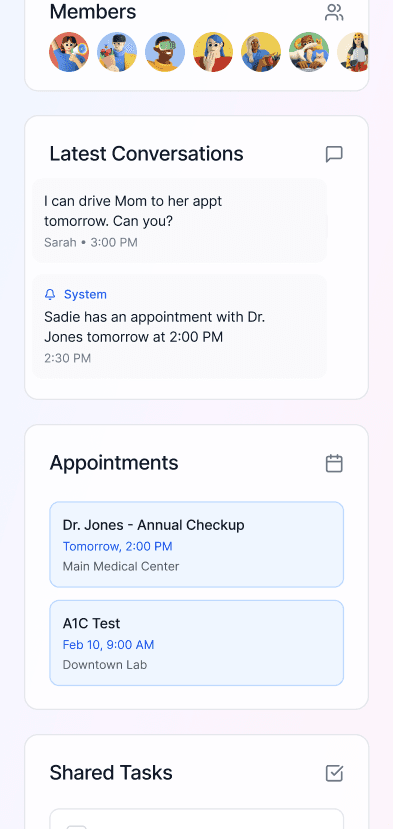
Family Circle is a concept feature designed to help people manage healthcare together without sacrificing privacy or emotional safety.
The experience allows users to invite trusted family members into a shared care space where they can message, coordinate appointments, and manage health tasks collaboratively.
02 — The problem
Managing healthcare is rarely a solo experience, but most digital health tools are built as if it is.
People often rely on family members to:
Help track appointments
Coordinate medications
Ask the right questions
Step in during stressful moments
However, inviting others into personal health information introduces emotional and ethical challenges:
Who should have access to what?
How do you explain sensitive permissions clearly?
How do you make shared care feel supportive & not overwhelming?
The goal was to design a flow that made shared care feel intentional, human, and safe.
03— My role
I led content strategy and UX writing for the Family Circle flow, including:
Voice & tone definition
Information hierarchy
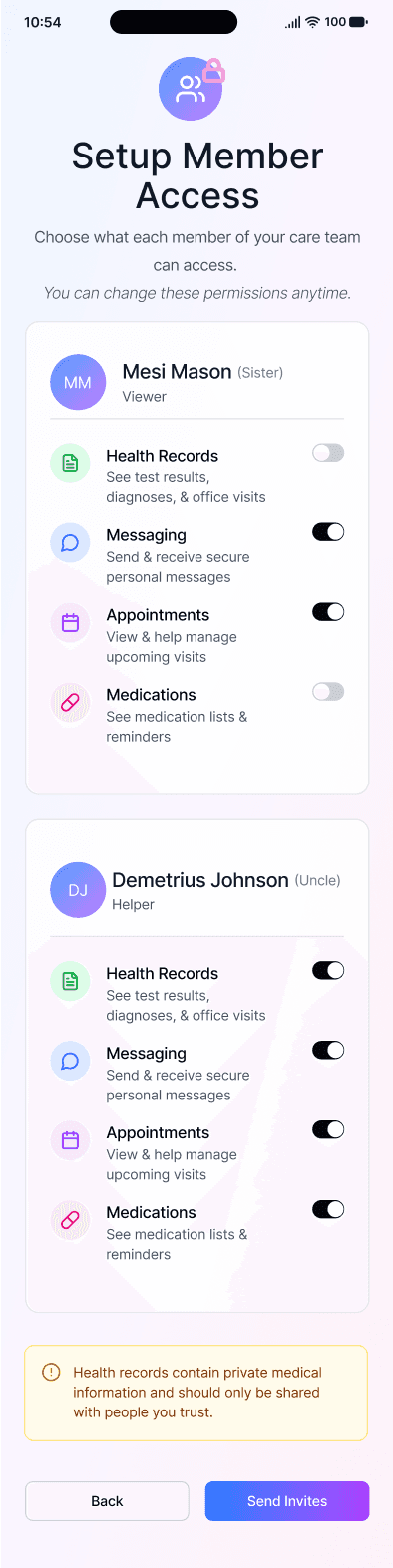
Microcopy for consent, permissions, and system messaging
Content patterns for emotionally sensitive moments
04 - Content design goals
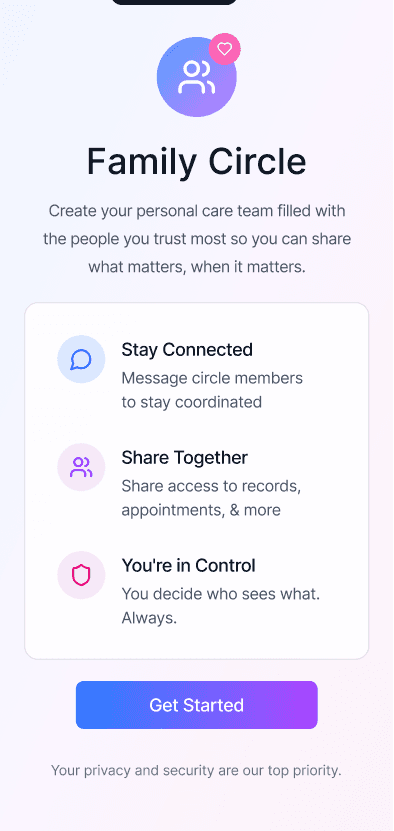
The content needed to:
Build trust quickly without sounding legal or cold
Make permissions understandable at a glance
Balance emotional warmth with clinical responsibility
Support multiple relationships and roles without confusion
05- Key content decisions
Leading with reassurance
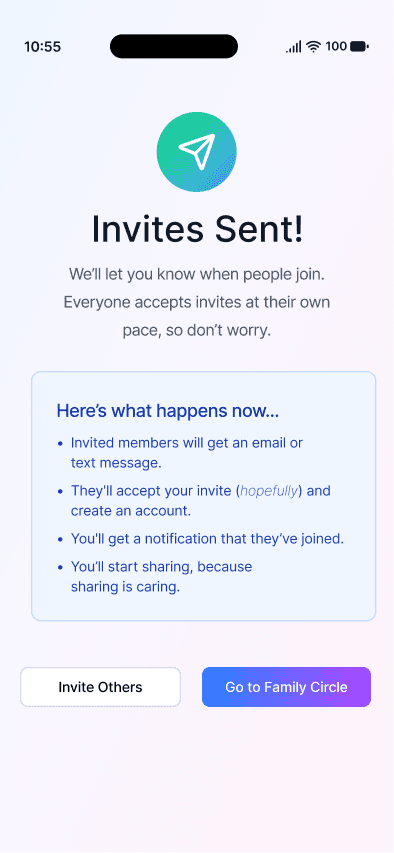
Rather than emphasizing data or features, the experience opens with emotional framing to highlight connection, support, and control.
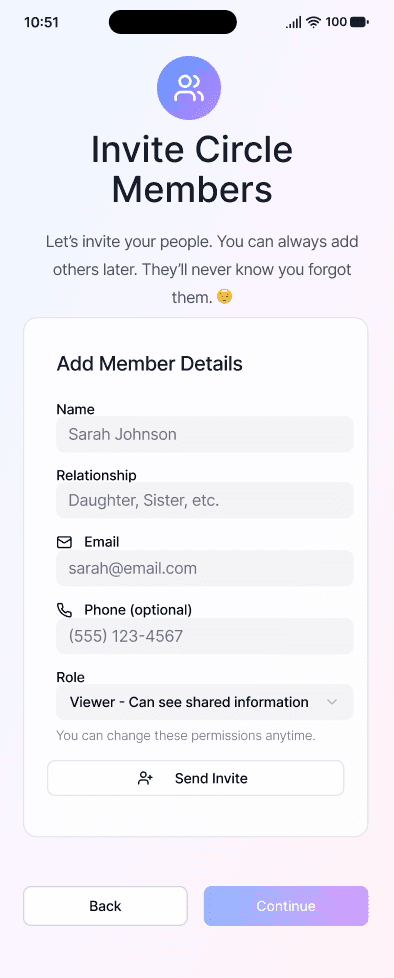
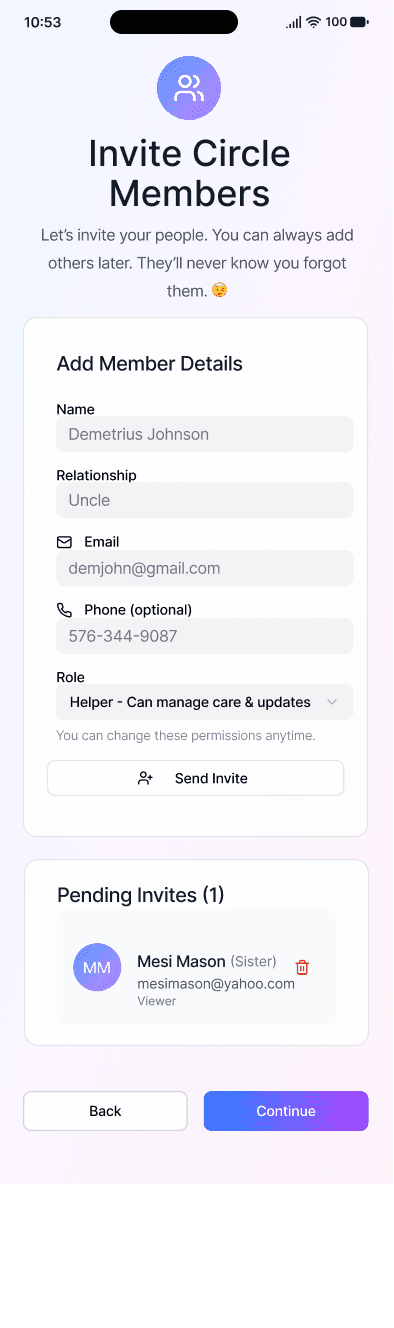
Humanizing permissions
Access levels are explained in plain language, focusing on what people can do rather than what they’re restricted from. Reassurance is repeated intentionally: permissions can always be changed.
Respecting autonomy
From invitation messaging to waiting states, the content reinforces that people join at their own pace. There’s no pressure and full transparency.
Designing for real relationships
Language throughout avoids institutional phrasing in favor of relational cues (“your people,” “your circle,” “help manage care together”).
06- Design Reflection
This project demonstrates how thoughtful content design can:
Reduce anxiety around sensitive actions
Encourage collaboration without coercion
Support trust-based relationships in high-stakes environments
Good content doesn’t just explain systems, it helps people navigate relationships within them.